Oben EV
OBEN EV, an emerging electric vehicle brand, approached our team, they didn’t have an existing website, just an idea and a vision. Their goal was simple yet ambitious: establish a digital presence that resonates with next-gen users and positions them as a premium yet bold EV brand in a competitive market. This wasn't just another corporate website revamp. It was about shaping their first impression, from scratch — where design, storytelling, and brand identity had to be created in harmony.

Client
Oben Electric
Services
Website Design, Web Application Design
Industry
EV Market
Timeline
2.5 Months
Challenges
The project had no existing design guidelines, so setting a consistent style from scratch was the first challenge. The second challenge was the tight delivery timeline, which made it hard to accommodate late client feedback. The third challenge came during development when missing screens and variations were discovered.
Solutions
To address the lack of guidelines, we created a lightweight design system early in the project. For the short timeline, designs were shared in smaller batches, allowing quicker reviews and approvals. To resolve gaps during development, I worked with QA to track issues and delivered missing designs quickly.
Design Process
1. Kickoff & Brand Understanding
We began with internal brainstorming, competitor analysis, and identifying where OBEN could stand out. As they were launching their first-ever digital identity, it was important to define not just the UI but the tone, voice, and feel of the brand.
- 001
2. Information Architecture
We built the structure from scratch. Since this was OBEN’s first digital product, we focused on building a lean yet scalable IA that serves both branding and functionality:
- 002
3. Wireframes & Collaboration
Using Figma we designed high-fidelity wireframes focusing on flow and hierarchy. I collaborated closely with frontend developers throughout ,aligning on feasibility early to reduce back-and-forth during dev handoff.
- 003
4. Visual System
With the structure in place, we moved into building a consistent visual system that could scale across the entire website. Focus was placed on layout balance, typography hierarchy, and visual clarity,ensuring the interface felt modern, functional, and aligned with the brand’s positioning.
- 004
5.Dev Integration & QA Feedback Loop
I stayed involved during frontend and backend development, helping QA teams resolve design bugs and edge cases. Regular feedback loops ,including alternate day client call, ensured alignment, trust, and faster iteration.
- 005
Information Architecture

Design System

Final Designs
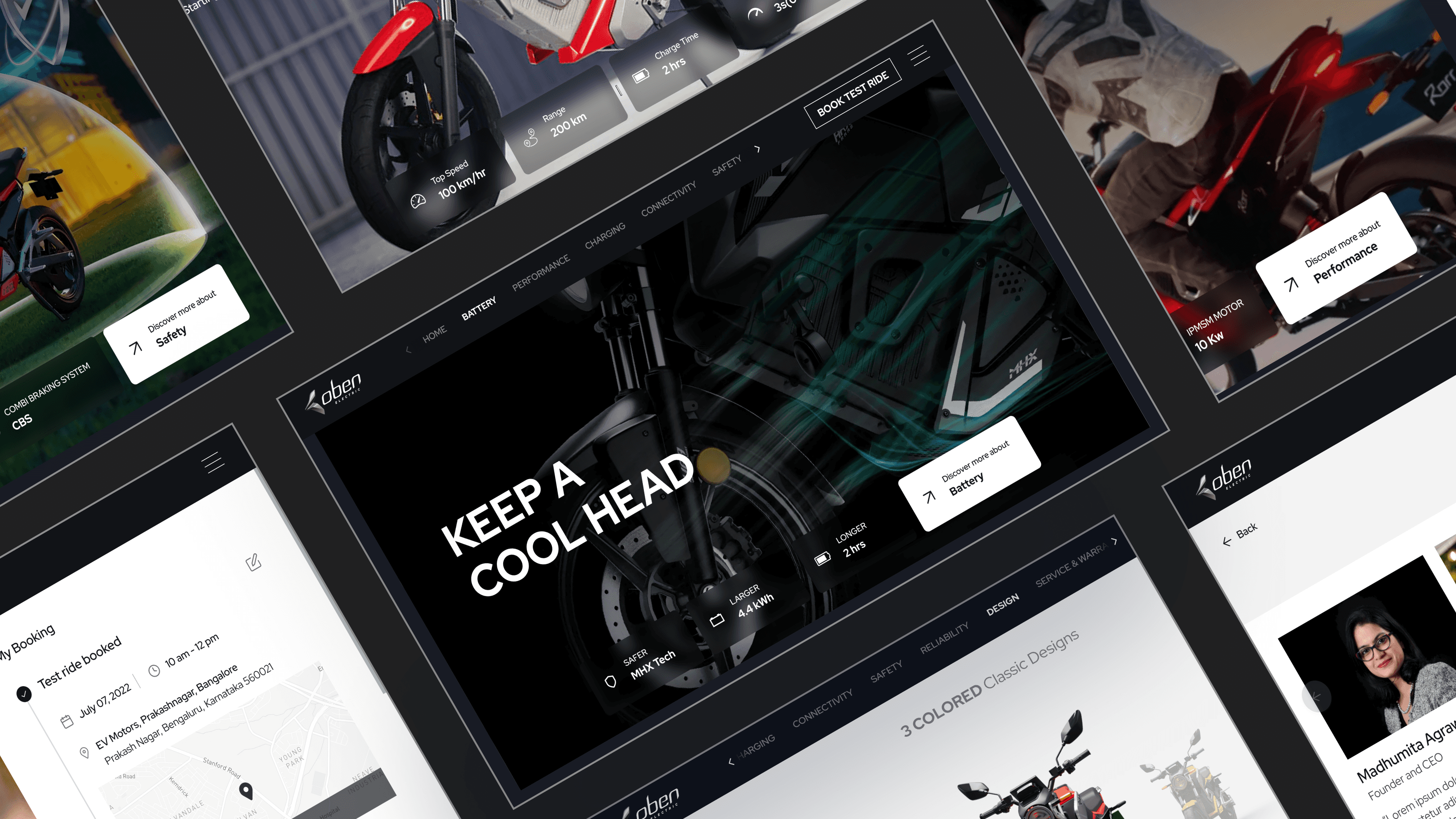

Final Outcome
The website went live as OBEN’s first digital presence, responsive across devices and with clear flows for actions like booking a test ride. Regular coordination with developers, QA, and the client helped deliver the project smoothly within the timeline.
From this project I learned the value of working closely with developers for feasibility, and how early feedback loops reduce rework during design and testing.
Oben EV
OBEN EV, an emerging electric vehicle brand, approached our team, they didn’t have an existing website, just an idea and a vision. Their goal was simple yet ambitious: establish a digital presence that resonates with next-gen users and positions them as a premium yet bold EV brand in a competitive market. This wasn't just another corporate website revamp. It was about shaping their first impression, from scratch — where design, storytelling, and brand identity had to be created in harmony.
Client
Oben Electric
Services
Website Design, Web Application Design
Industry
EV Market
Timeline
2.5 Months
Challenges
The project had no existing design guidelines, so setting a consistent style from scratch was the first challenge. The second challenge was the tight delivery timeline, which made it hard to accommodate late client feedback. The third challenge came during development when missing screens and variations were discovered.
Solutions
To address the lack of guidelines, we created a lightweight design system early in the project. For the short timeline, designs were shared in smaller batches, allowing quicker reviews and approvals. To resolve gaps during development, I worked with QA to track issues and delivered missing designs quickly.
Design Process
1. Kickoff & Brand Understanding
We began with internal brainstorming, competitor analysis, and identifying where OBEN could stand out. As they were launching their first-ever digital identity, it was important to define not just the UI but the tone, voice, and feel of the brand.
- 001
2. Information Architecture
We built the structure from scratch. Since this was OBEN’s first digital product, we focused on building a lean yet scalable IA that serves both branding and functionality:
- 002
3. Wireframes & Collaboration
Using Figma we designed high-fidelity wireframes focusing on flow and hierarchy. I collaborated closely with frontend developers throughout — aligning on feasibility early to reduce back-and-forth during dev handoff.
- 003
4. Visual System
With the structure in place, we moved into building a consistent visual system that could scale across the entire website. Focus was placed on layout balance, typography hierarchy, and visual clarity,ensuring the interface felt modern, functional, and aligned with the brand’s positioning.
- 004
5.Dev Integration & QA Feedback Loop
I stayed involved during frontend and backend development, helping QA teams resolve design bugs and edge cases. Regular feedback loops ,including alternate day client call, ensured alignment, trust, and faster iteration.
- 005
Information Architecture
Design System
Final Designs
Final Outcome
Oben EV
OBEN EV, an emerging electric vehicle brand, approached our team, they didn’t have an existing website, just an idea and a vision. Their goal was simple yet ambitious: establish a digital presence that resonates with next-gen users and positions them as a premium yet bold EV brand in a competitive market. This wasn't just another corporate website revamp. It was about shaping their first impression, from scratch — where design, storytelling, and brand identity had to be created in harmony.
Client
Oben Electric
Services
Website Design, Web Application Design
Industry
EV Market
Timeline
2.5 Months
Challenges
The project had no existing design guidelines, so setting a consistent style from scratch was the first challenge. The second challenge was the tight delivery timeline, which made it hard to accommodate late client feedback. The third challenge came during development when missing screens and variations were discovered.
Solutions
To address the lack of guidelines, we created a lightweight design system early in the project. For the short timeline, designs were shared in smaller batches, allowing quicker reviews and approvals. To resolve gaps during development, I worked with QA to track issues and delivered missing designs quickly.
Design Process
1. Kickoff & Brand Understanding
We began with internal brainstorming, competitor analysis, and identifying where OBEN could stand out. As they were launching their first-ever digital identity, it was important to define not just the UI but the tone, voice, and feel of the brand.
- 001
2. Information Architecture
We built the structure from scratch. Since this was OBEN’s first digital product, we focused on building a lean yet scalable IA that serves both branding and functionality:
- 002
3. Wireframes & Collaboration
Using Figma we designed high-fidelity wireframes focusing on flow and hierarchy. I collaborated closely with frontend developers throughout — aligning on feasibility early to reduce back-and-forth during dev handoff.
- 003
4. Visual System
With the structure in place, we moved into building a consistent visual system that could scale across the entire website. Focus was placed on layout balance, typography hierarchy, and visual clarity,ensuring the interface felt modern, functional, and aligned with the brand’s positioning.
- 004
5.Dev Integration & QA Feedback Loop
I stayed involved during frontend and backend development, helping QA teams resolve design bugs and edge cases. Regular feedback loops ,including alternate day client call, ensured alignment, trust, and faster iteration.
- 005
Information Architecture
Design System
Final Designs